Monthly Plan — Class III & IV — September 2026
Important Dates — September 2026
A quick-reference index of every festival and important day this plan is built around, drawn from the school calendar.
| Date | Occasion | Note |
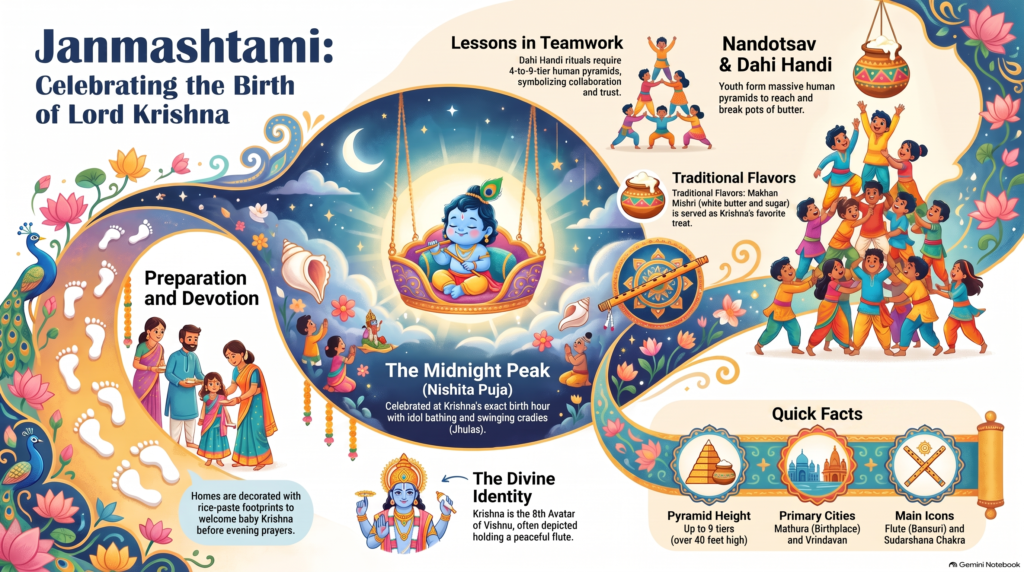
| Thu, 3 Sep | Janmashtami | Festival celebrating the birth of Lord Krishna. |
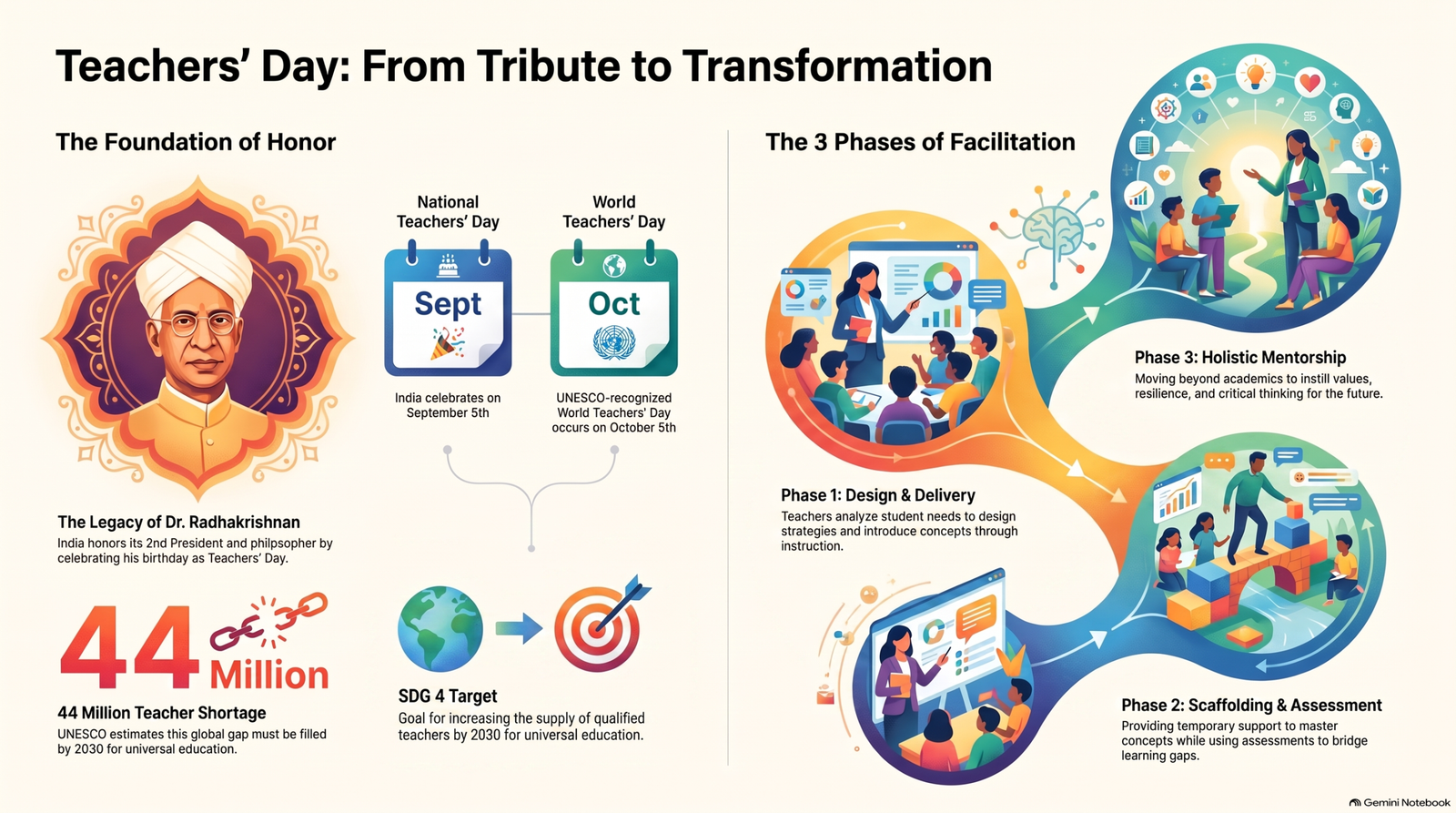
| Sat, 5 Sep | Teachers’ Day | Birth anniversary of Dr. S. Radhakrishnan; honouring all educators. |
| Mon, 14 Sep | Ganesh Chaturthi & Hindi Diwas | Festival of Lord Ganesha, and the day Hindi was adopted as an official language of India (1949). |
| Tue, 15 Sep | Engineers’ Day | Birth anniversary of Bharat Ratna Sir M. Visvesvaraya. |
| Mon, 21 Sep | Ramdev Jayanti | Noted on the school calendar; brief mention only. |
| Sun, 27 Sep | World Tourism Day / Bhagat Singh Jayanti | No assembly (Sunday) — noted for reference only. |
Assembly Topics for the Month — Overview
| Week | Assembly Topic(s) |
| Week 1 (1–5 Sep) | Janmashtami — Krishna’s Life & Teachings + Teachers’ Day |
| Week 2 (7–12 Sep) | Health, Hygiene & Life Skills (discipline, time management, digital wellbeing) |
| Week 3 (14–19 Sep) | Ganesh Chaturthi & Hindi Diwas + Engineers’ Day (STEM & famous Indian engineers) |
| Week 4 (21–26 Sep) | Water Conservation & Environment (water cycle, scarcity, harvesting) |
Assembly rhythm reminder:
- Monday, Tuesday, Wednesday — Indoor assembly (Interactive Flat Panel available for videos/PPT).
- Thursday, Friday — Outdoor assembly.
- Saturday — Outdoor assembly, held on select Saturdays as noted in the tables below.
- Sunday — No assembly.
- Class 3–4 assemblies open daily with Prayer, a student-read Thought for the Day, and (Tue onward) a one-line student News Headline.
Week 1 (1–5 September) — Janmashtami & Teachers’ Day
| Date | Day | Type | Focus | Content / Activity | Student Engagement |
| Tue 1 Sep | Tue | Indoor | Janmashtami — Krishna’s Life | IFP video/PPT: Krishna’s birth in Mathura, childhood in Vrindavan; Thought for the Day — a simplified Gita quote on doing one’s duty. | Student reads Thought for the Day; open Q&A on the story. |
| Wed 2 Sep | Wed | Indoor | Krishna’s Teachings | The Krishna–Sudama story of true friendship; values of loyalty and humility discussed briefly. | 2–3 students share what friendship means to them. |
| Thu 3 Sep | Thu | Special | Janmashtami Celebration | Meaning of Dahi Handi, devotional song, short tableau by student volunteers, sweets distribution. | Student volunteers perform; whole school joins the song. |
| Fri 4 Sep | Fri | Outdoor | Recap + Teachers’ Day Intro | Recap Janmashtami; introduce Dr. S. Radhakrishnan and why India celebrates Teachers’ Day on his birthday. | Open mic: students share a memory of a favourite teacher. |
| Sat 5 Sep | Sat | Special | Teachers’ Day Celebration | Student-led tributes and short speeches, thank-you cards presented, felicitation of teachers. | 2–3 students deliver short prepared speeches. |
Week 2 (7–12 September) — Health, Hygiene & Life Skills
| Date | Day | Type | Focus | Content / Activity | Student Engagement |
| Mon 7 Sep | Mon | Indoor | Health & Hygiene | IFP video: germs and immunity, balanced diet, importance of sleep and exercise. | Quick show of hands poll: who follows which habit. |
| Tue 8 Sep | Tue | Indoor | Discipline & Time Management | Punctuality, planning a daily routine, healthy screen-time limits for a digital generation. | Students share their daily routine in one line each. |
| Wed 9 Sep | Wed | Indoor | Cleanliness & Swachh Bharat | Overview of the Swachh Bharat Mission; community responsibility for cleanliness. | Discussion: one cleanliness change each child can make at school. |
| Thu 10 Sep | Thu | Outdoor | Open Forum | Students volunteer to share a healthy habit they follow at home. | 5–6 volunteers speak for 30 seconds each. |
| Fri 11 Sep | Fri | Outdoor | Health & Habits Quiz | House-wise quiz covering the week’s health, hygiene and discipline facts. | Team quiz — one representative per house. |
| Sat 12 Sep | Sat | Outdoor (if held) | Recap & Role Play | Short student role play contrasting a good-habit day with a bad-habit day. | Student-scripted and student-performed. |
Week 3 (14–19 September) — Ganesh Chaturthi, Hindi Diwas & Engineers’ Day
| Date | Day | Type | Focus | Content / Activity | Student Engagement |
| Mon 14 Sep | Mon | Special | Ganesh Chaturthi & Hindi Diwas | Deeper look at Ganesha’s significance, eco-friendly (clay) idols vs. plaster; Hindi Diwas — Hindi became an official language on 14 Sep 1949. | Student recites a short Hindi poem; ‘Word of the Day’ in Hindi. |
| Tue 15 Sep | Tue | Indoor | Engineers’ Day | Life of Sir M. Visvesvaraya; famous Indian engineering feats — dams, bridges, ISRO missions. | ‘Did You Know?’ facts read out by a student. |
| Wed 16 Sep | Wed | Indoor | Recap + Careers in STEM | Recap Ganesha and Visvesvaraya; brief introduction to engineering as a career path. | Short discussion: what would you like to build or design? |
| Thu 17 Sep | Thu | Outdoor | Ganpati Song & Tableau | Ganpati bhajan sung together; brief student tableau. | Whole-school singing; volunteers in tableau. |
| Fri 18 Sep | Fri | Outdoor | Week Recap Quiz | Quiz mixing Ganesha, Hindi Diwas and Engineers’ Day facts. | Buzzer-style quiz between two teams. |
| Sat 19 Sep | Sat | Outdoor (if held) | Project Showcase | Student posters on ‘Famous Indian Engineers’ or ‘Eco-friendly Ganesha’ displayed and explained. | 2–3 students present their poster to the school. |
Week 4 (21–26 September) — Water Conservation & Environment
| Date | Day | Type | Focus | Content / Activity | Student Engagement |
| Mon 21 Sep | Mon | Indoor | The Water Cycle | IFP video: evaporation, condensation, precipitation; why water is a limited resource despite covering most of Earth. | Diagram-labelling volunteer at the IFP. |
| Tue 22 Sep | Tue | Indoor | Water Conservation | Rainwater harvesting, judicious daily use, real examples from Rajasthan’s traditional stepwells (baoris). | Students list one way they can save water at home. |
| Wed 23 Sep | Wed | Indoor | Water in the News | A brief, simplified current-affairs discussion on a river or water-scarcity issue in India. | Guided class discussion, teacher-moderated. |
| Thu 24 Sep | Thu | Outdoor | Save Water Pledge | Whole-school pledge to conserve water; students share self-written slogans. | Slogan-writing shared aloud by volunteers. |
| Fri 25 Sep | Fri | Outdoor | Water Quiz | Quiz on the water cycle, conservation methods and water facts. | Rapid-fire round, house points awarded. |
| Sat 26 Sep | Sat | Outdoor (if held) | Save Water Campaign | Student posters and slogans on water conservation displayed around the assembly area. | Poster walk — students explain their posters. |
Short Stories for September
Four stories the teacher (or a student reader) can narrate during assembly, one for each week’s theme — written with slightly richer language and a discussion question suited to Class III & IV, alongside the usual one-line moral.
1. Eklavya’s Guru Dakshina
Linked to: Teachers’ Day (Week 1)
In the kingdom of Hastinapur, a great teacher named Dronacharya taught archery only to the princes. A tribal boy named Eklavya wished to learn too, but he was turned away. Undeterred, Eklavya made a clay statue of Dronacharya in the forest, bowed to it every day, and practised archery for hours, imagining his guru was watching him. Through sheer dedication, he became a greater archer than even Arjuna, Dronacharya’s finest student. One day, Dronacharya discovered Eklavya’s skill and was astonished. When he asked for his guru dakshina (a teacher’s fee), as was the custom, Eklavya offered anything he had. Dronacharya asked for the thumb of his right hand — the very thumb that made Eklavya’s archery possible. Without hesitation, Eklavya offered it with respect, for a promise to one’s teacher must always be honoured.
Moral: True respect for a teacher and one’s own hard work can achieve what even privilege cannot.
Discuss: What does it mean to keep a promise, even when it is difficult?
Best told: Tuesday or Wednesday, Week 1 — alongside the Teachers’ Day topic.
2. The Ant and the Grasshopper
Linked to: Discipline & Time Management (Week 2)
All through the sunny summer, a little ant worked hard every day, carrying grains of food back to her nest, one by one, preparing for the months ahead. A grasshopper nearby spent his days singing and playing in the warm sun. ‘Why work so hard?’ he laughed. ‘Come and enjoy the summer with me!’ But the ant simply replied, ‘Winter will come, and we must be ready,’ and continued her work. When the cold winter finally arrived, the grasshopper found no food anywhere, and shivered with hunger. He went to the ant’s nest and knocked, ashamed. The kind ants, who had planned well, shared their stored food with him and taught him how to prepare better for the seasons ahead.
Moral: Planning ahead and working steadily brings security when we need it most.
Discuss: What is one thing you could plan for this week instead of leaving it for later?
Best told: Monday or Tuesday, Week 2 — to open the Discipline & Time Management topic.
3. Ganesha, the Scribe of the Mahabharata
Linked to: Ganesh Chaturthi & Engineers’ Day (Week 3)
When the sage Ved Vyasa wished to compose the great epic Mahabharata, he needed someone quick and clever enough to write as fast as he could compose. He approached Lord Ganesha, the god of wisdom, and requested his help. Ganesha agreed, but on one condition: ‘You must recite without ever pausing, or I will stop writing.’ Vyasa, in turn, set his own condition: ‘You must understand each verse fully before you write it down.’ And so they began. Partway through, Ganesha’s stylus broke. Rather than pause and break his promise, Ganesha snapped off one of his own tusks and used it as a new pen, continuing without a single interruption. Together, through cleverness, sacrifice and unwavering focus, they completed one of the greatest works in Indian literature.
Moral: True cleverness lies not just in speed, but in finding a solution when things break down — a lesson every engineer knows well.
Discuss: Can you think of a time you had to find a creative solution when something didn’t go as planned?
Best told: Monday, 14 Sep, or Tuesday, 15 Sep — bridging Ganesh Chaturthi and Engineers’ Day.
4. The Village That Built a Baori
Linked to: Water Conservation (Week 4)
In a small village in the deserts of Rajasthan, the summers were long and the rains were few. Every year, the village well ran dry, and women had to walk for hours to fetch water from a distant river. One year, an elder named Ratan Singh gathered the villagers together. ‘We cannot wait for the rains to save us,’ he said. ‘We must build a baori — a stepwell — to catch and store every drop that falls.’ For months, the whole village worked together, digging deep into the earth and carving stone steps that spiralled down to the water below. When the monsoon finally came, the baori filled with rainwater, enough to last the village through the driest months. Even today, stepwells built by our ancestors stand across Rajasthan, a reminder that when a community works together, it can conserve what nature gives so sparingly.
Moral: Traditional wisdom and teamwork can solve even the toughest problems — water conservation is a responsibility we all share.
Discuss: What is one way our school or home could store or save water better?
Best told: Monday or Tuesday, Week 4 — to open the Water Conservation topic.
Teachers Day