| S.No. | Topic / Chapter Title |
|---|---|
| 1. | All About November Month |
| 2. | Late Autumn Turning to Early Winter (Sharad Ritu to Hemant Ritu) |
| 3. | November Diet & Flora |
| 4. | Nature Watch: November in the Aravallis |
| 5. | Festivals & Important Days of November 2026 |
| 6. | Special Focus: Diwali (The Festival of Lights) |
| 7. | Inspiring Quotes on Light, Children & Dreams |
| 8. | Current Affairs (November 2026 Updates) |
| 9. | Monthly Moral Stories (Character Building) |
| 10. | Festival Stories (Cultural Heritage) |
Topic 1All About November Month
- November is the 11th month of the year and has 30 days. Its name comes from the Latin word ‘novem’, meaning nine, because it was the ninth month in the old Roman calendar.
- In 2026, November starts on a Sunday, so the month has five Sundays: 1, 8, 15, 22 and 29 November.
- Rajasthan took its present shape on 1 November 1956, when Ajmer and some other areas joined the state. Madhya Pradesh, Kerala and Karnataka (then Mysore State) were also reorganised on the same day.
- Diwali, the festival of lights, falls on 8 November in 2026, a Sunday.
- Scientist C. V. Raman was born on 7 November 1888. He won the Nobel Prize in Physics in 1930 for his work on how light scatters, and he was the first Asian to win a Nobel Prize in science.
- Maulana Abul Kalam Azad, India’s first Education Minister, was born on 11 November 1888. We celebrate his birthday as National Education Day.
- Salim Ali, known as the ‘Birdman of India’, was born on 12 November 1896. He wrote the famous book ‘The Book of Indian Birds’.
- Pandit Jawaharlal Nehru, India’s first Prime Minister, was born on 14 November 1889. Children lovingly called him ‘Chacha Nehru’, and his birthday is Children’s Day.
- The Constitution of India was adopted on 26 November 1949. It came into force on 26 January 1950.
- The chrysanthemum (guldaudi) is the birth flower of November, and topaz is the birthstone. Chrysanthemums bloom in gardens all over North India this month.
Topic 2Late Autumn Turning to Early Winter (Sharad Ritu to Hemant Ritu)
- In the Indian calendar, the month of Kartik runs until Kartik Purnima (full moon) on 24 November. Margashirsha, also called Agahan, begins after it. The season moves from Sharad (autumn) to Hemant (early winter).
- Days become shorter and nights longer. In Alwar the afternoons stay pleasant at about 26–28°C, but nights turn chilly and fall to about 10°C by the end of the month.
- Light mist and fog cover the Aravalli hills and the fields on early mornings. People bring out sweaters, shawls and quilts.
- Farmers in Rajasthan sow rabi crops such as wheat, mustard, barley and gram after the monsoon crops are harvested.
- Many migratory birds arrive from colder lands in the north to spend the winter in India’s lakes and wetlands.
Topic 3November Diet & Flora
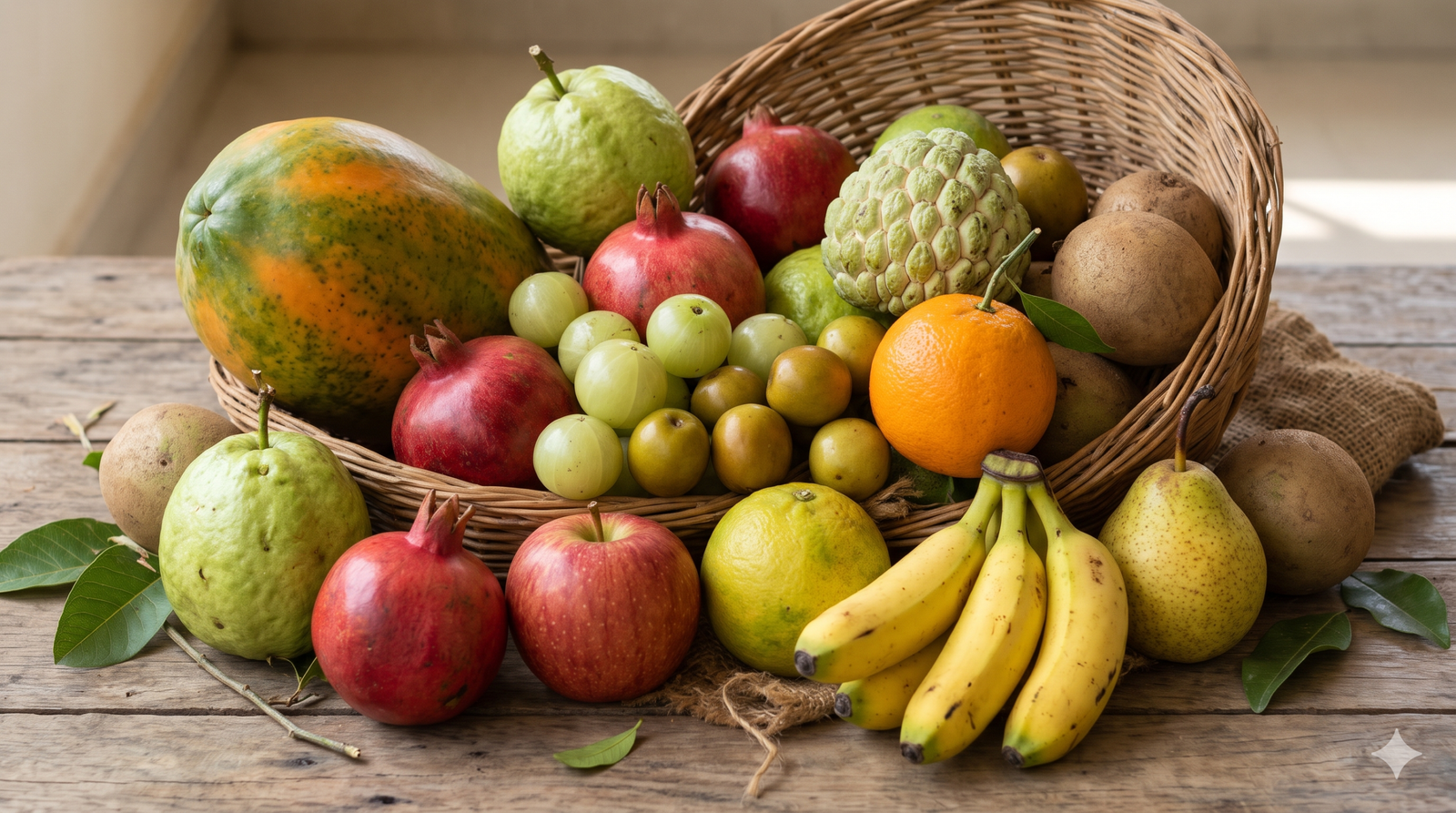
Seasonal fruits
- Guava (Amrud)
- Pomegranate (Anar)
- Custard Apple (Sitaphal)
- Indian Gooseberry (Amla)
- Jujube (Ber)
- Kinnow Orange
- Sweet Lime (Mausambi)
- Apple (Seb)
- Pear (Nashpati)
- Banana (Kela)
- Papaya (Papita)
- Sapota (Chikoo)
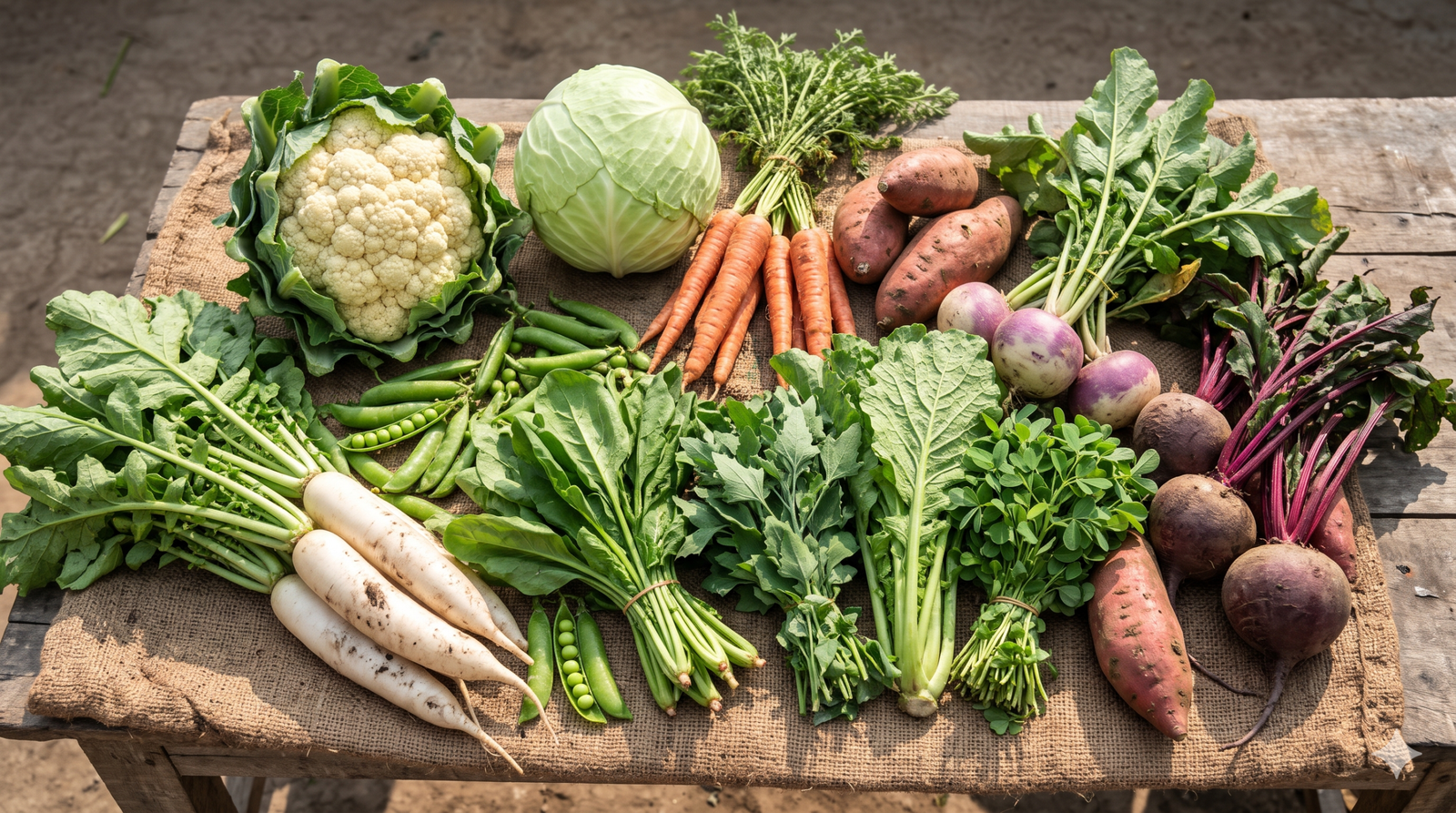
Seasonal vegetables
- Cauliflower (Phool Gobhi)
- Cabbage (Patta Gobhi)
- Carrot (Gajar)
- Radish (Mooli)
- Green Peas (Matar)
- Spinach (Palak)
- Bathua
- Mustard Greens (Sarson)
- Fenugreek Leaves (Methi)
- Turnip (Shalgam)
- Beetroot (Chukandar)
- Sweet Potato (Shakarkandi)
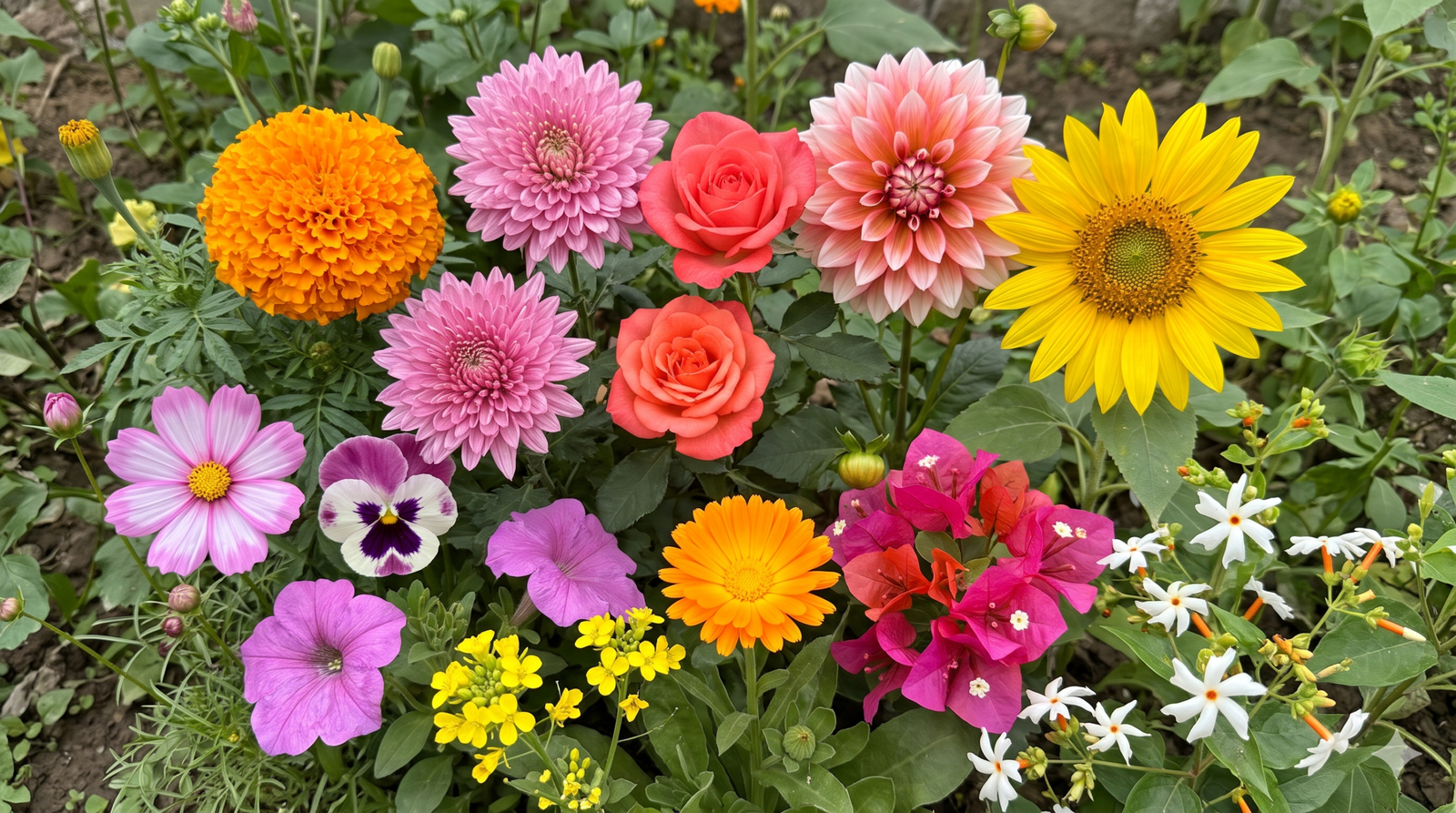
Seasonal flowers
- Marigold (Genda)
- Chrysanthemum (Guldaudi)
- Rose (Gulab)
- Dahlia
- Sunflower (Surajmukhi)
- Cosmos
- Pansy
- Petunia
- Calendula
- Bougainvillea
- Mustard Flower (Sarson)
- Night Jasmine (Harsingar)
Topic 4Nature Watch: November in the Aravallis
- Indian Peafowl (feeding on seeds and insects in fields and basking in the soft afternoon sun; the males have shed their long trains by now)
- Sambar Deer (grazing in the forests of Sariska in the cool mornings and evenings and resting in shade during the day)
- Nilgai (moving in small herds across farmland edges and dry hill slopes, eating fresh green shoots of winter crops)
- Chital (Spotted Deer) (gathering in groups near water points and feeding on fresh grass)
- Indian Leopard (resting on rocky Aravalli ledges in the day and hunting at dusk and night in the cooler weather)
- Northern Plains Grey Langur (sitting in groups on trees and temple walls, warming up in the morning sunshine)
- Striped Hyena (coming out at night to search for food, sheltering in rocky caves by day)
- Rufous Treepie (calling loudly from babul and khejri trees and feeding on fruits and insects)
- Common Hoopoe (probing the ground with its long beak to find insects in the cool, soft soil)
- Common Stonechat (a winter visitor perching on bushes and fence posts in open fields, darting out to catch insects)
Topic 5Festivals & Important Days of November 2026
- November 8 – Diwali (Deepavali): The festival of lights is celebrated with diyas, rangoli, sweets and prayers to Goddess Lakshmi. It is celebrated by Hindus, Jains and Sikhs in their own special ways.
- November 11 – National Education Day: Celebrated on the birthday of Maulana Abul Kalam Azad, independent India’s first Education Minister, who worked to bring schooling to every child.
- November 12 – Birth Anniversary of Dr Salim Ali (Bird Watching Day): We remember India’s ‘Birdman’, who taught the country to love and protect birds. Children can spot and name birds in the school garden.
- November 14 – Children’s Day: Celebrated on the birthday of Pandit Jawaharlal Nehru, who loved children and believed they are the future of India.
- November 24 – Guru Nanak Jayanti (Gurpurab): Marks the birth anniversary of Guru Nanak Dev Ji, the first Sikh Guru, who taught honesty, equality and service. It falls on Kartik Purnima.
- November 26 – Constitution Day (Samvidhan Divas): We remember the day in 1949 when the Constituent Assembly adopted the Constitution of India.
Topic 6Special Focus: Diwali (The Festival of Lights)
- Diwali, or Deepavali, means ‘a row of lamps’. In 2026, the main day of Diwali with Lakshmi Puja is on Sunday, 8 November.
- Diwali is a festival of five days: Dhanteras, Naraka Chaturdashi (Choti Diwali), Lakshmi Puja, Govardhan Puja and Bhai Dooj. Families clean their homes, light diyas, draw rangoli, share sweets and visit relatives.
- People of different faiths celebrate Diwali with their own meaning. Hindus remember Lord Rama’s return to Ayodhya, Jains remember the nirvana of Lord Mahavira, and Sikhs celebrate Bandi Chhor Divas, when Guru Hargobind Ji returned after release from prison.
- Rajasthan’s markets, forts and havelis glow with lights at Diwali, and many families buy new clay diyas made by local potters.
- Let us have a safe and green Diwali: use clay diyas, avoid loud crackers that scare animals and birds and cause pollution, and share sweets and gifts with those who have less.

Topic 7Inspiring Quotes on Light, Children & Dreams
“The children of today will make the India of tomorrow. The way we bring them up will determine the future of the country.”– Jawaharlal Nehru
“Darkness cannot drive out darkness; only light can do that. Hate cannot drive out hate; only love can do that.”– Martin Luther King Jr.
“Dream, dream, dream. Dreams transform into thoughts and thoughts result in action.”– Dr A. P. J. Abdul Kalam
Topic 8Current Affairs (November 2026 Updates)
To be added later by the teacher.
Topic 9Monthly Moral Stories (Character Building)
Tara’s Warm Shawl
Tara lived in a village near Alwar. One November morning, mist covered the Aravalli hills and the wind felt sharp. On her way to school, Tara saw an old woman, Dadi Kamla, shivering at the bus stop with only a thin cotton dupatta. Tara was wearing the new woollen shawl her mother had knitted for Diwali. She loved it dearly. For a moment she held it tight. Then she remembered her grandmother’s words: ‘Warmth grows when you share it.’ Tara quietly wrapped the shawl around Dadi Kamla’s shoulders. The old woman smiled and blessed her. At school, Tara felt cold, but her heart felt warm. When her mother heard the story, she hugged her and said, ‘I will knit another one.’ By evening, the teacher had told the whole class, and many children brought old sweaters to donate for people who needed them.
Moral: Sharing what we love with others brings the deepest warmth.
Rohan and the Clay Diyas
Rohan had saved fifty rupees to buy crackers for Diwali. Walking to the market in Alwar, he passed Kumhar Kaka, the potter, sitting beside rows of clay diyas. Not one customer had stopped. ‘Nobody buys many diyas now,’ Kaka sighed. Just then, a loud cracker burst nearby. Rohan saw a puppy shaking under a cart and a flock of pigeons flying away in fear. He felt sorry for them. He looked at his fifty rupees, then at the diyas. ‘Kaka, please give me all the diyas that fifty rupees can buy,’ he said. That evening, Rohan and his sister decorated the house, the gate and even the neighbour’s step with little flames. The street glowed softly and the puppy slept peacefully near the warm lights. Kumhar Kaka’s family also enjoyed a happy Diwali. Rohan felt happier than any cracker could have made him.
Moral: Kindness to people and animals makes every festival truly bright.
Topic 10Festival Stories (Cultural Heritage)
Why We Celebrate Diwali
Long ago, Prince Rama of Ayodhya was sent to the forest for fourteen years, along with his wife Sita and brother Lakshmana. In the forest, the demon king Ravana carried Sita away. With the help of Hanuman and the vanar sena, Rama crossed the sea and defeated Ravana in a great battle. When the fourteen years ended, Rama, Sita and Lakshmana began their journey home. It was a dark new-moon night, an amavasya. The people of Ayodhya wanted to welcome their beloved prince. They cleaned their houses and lit rows of clay lamps along every path and rooftop. The whole city shone with light. This is why we celebrate Diwali, the festival of lights. Different parts of India remember other stories too, such as Goddess Lakshmi and Lord Krishna, but the message of light is the same everywhere.
Moral: Truth and goodness always win over darkness and evil.

Guru Nanak and the True Bargain
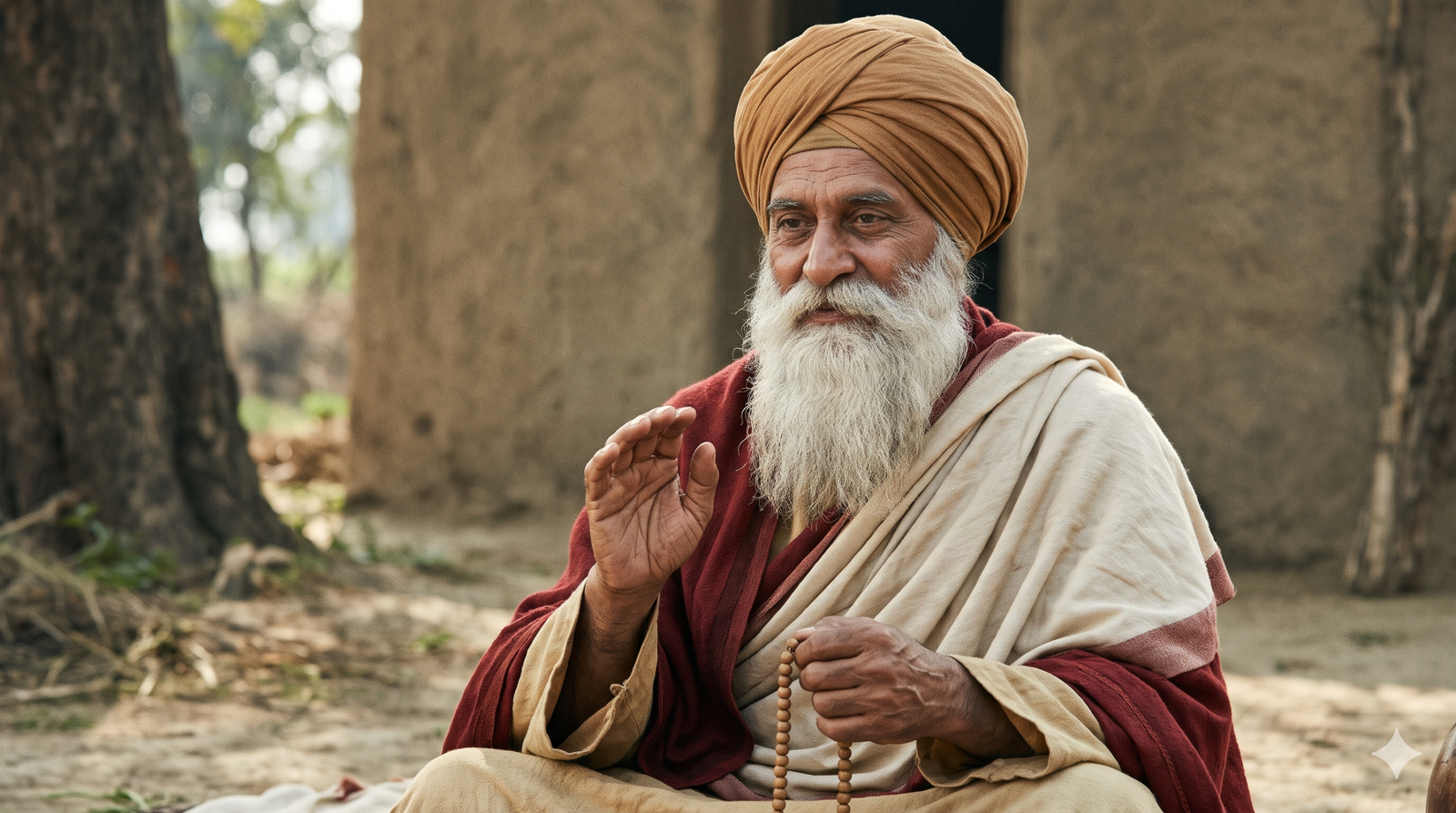
Guru Nanak Dev Ji, the founder of Sikhism, was born in 1469 in Talwandi, now in Pakistan. When he was a young man, his father gave him twenty rupees and said, ‘Go to the market and make a good bargain, so that we may earn a profit.’ Nanak set out with his friend Bala. On the way, they met a group of holy men who had not eaten for days. Nanak’s heart filled with kindness. He used all twenty rupees to buy food and fed them. When he returned, his father was angry. But Nanak said calmly, ‘Father, I made the truest bargain of all — feeding the hungry.’ Guru Nanak later taught three simple ideas: work honestly, remember God, and share with others. Even today, in every gurdwara, the langar serves free meals to everyone, rich or poor, sitting together as equals.
Moral: Helping the needy is the best use of what we have.
The Making of Our Constitution
When India became free in 1947, the country needed its own set of rules to run fairly. A group of wise leaders, called the Constituent Assembly, began this big task. Dr B. R. Ambedkar led the Drafting Committee, and Dr Rajendra Prasad was the President of the Assembly. They worked for nearly three years, discussing every idea carefully. The final book was written by hand in beautiful calligraphy by Prem Behari Narain Raizada, and artists led by Nandalal Bose decorated its pages. On 26 November 1949, the Constitution was adopted. It came into force on 26 January 1950, which we celebrate as Republic Day. The Constitution promises justice, liberty, equality and brotherhood to every Indian, whatever their religion, language or background. That is why 26 November is celebrated as Constitution Day, or Samvidhan Divas.
Moral: Fair rules that treat everyone equally make a country strong.